
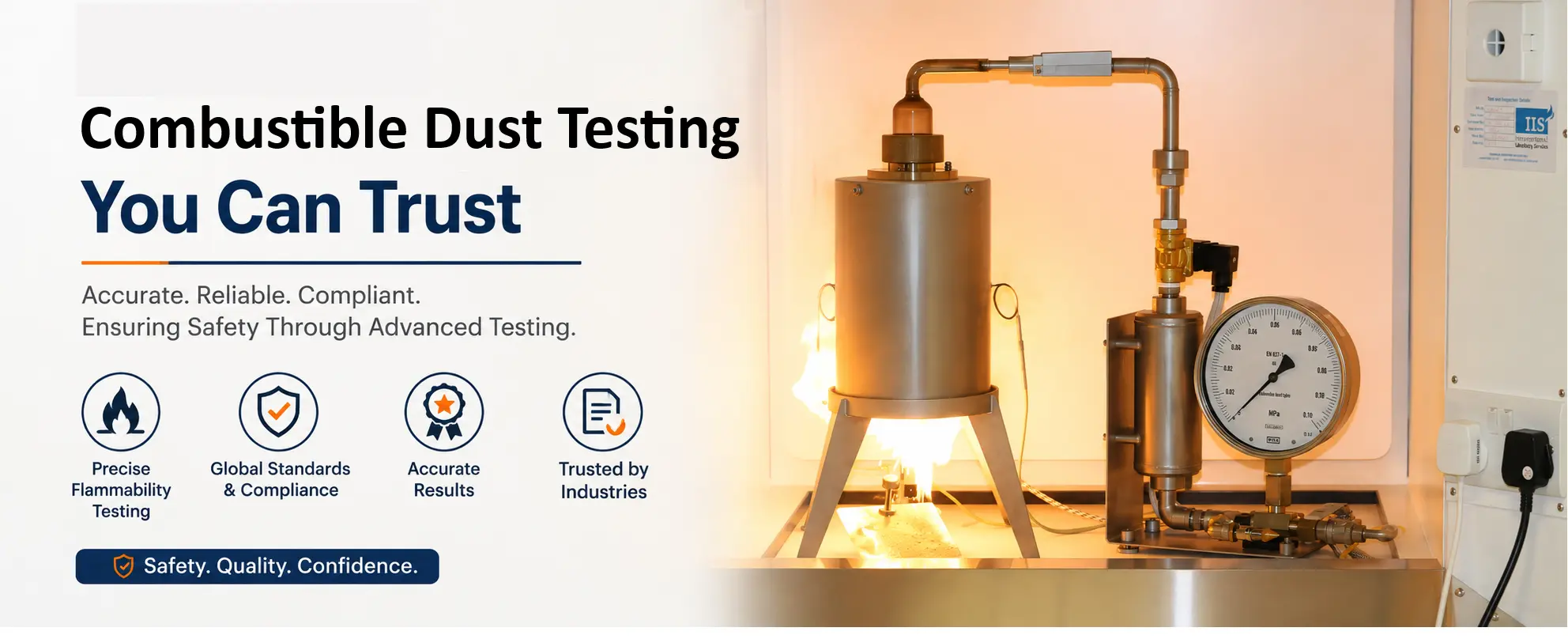
Fine Particles. Explosive Effects.
ST 1–3
20 L
6+
ATEX
Fine Particles. Explosive Effects.
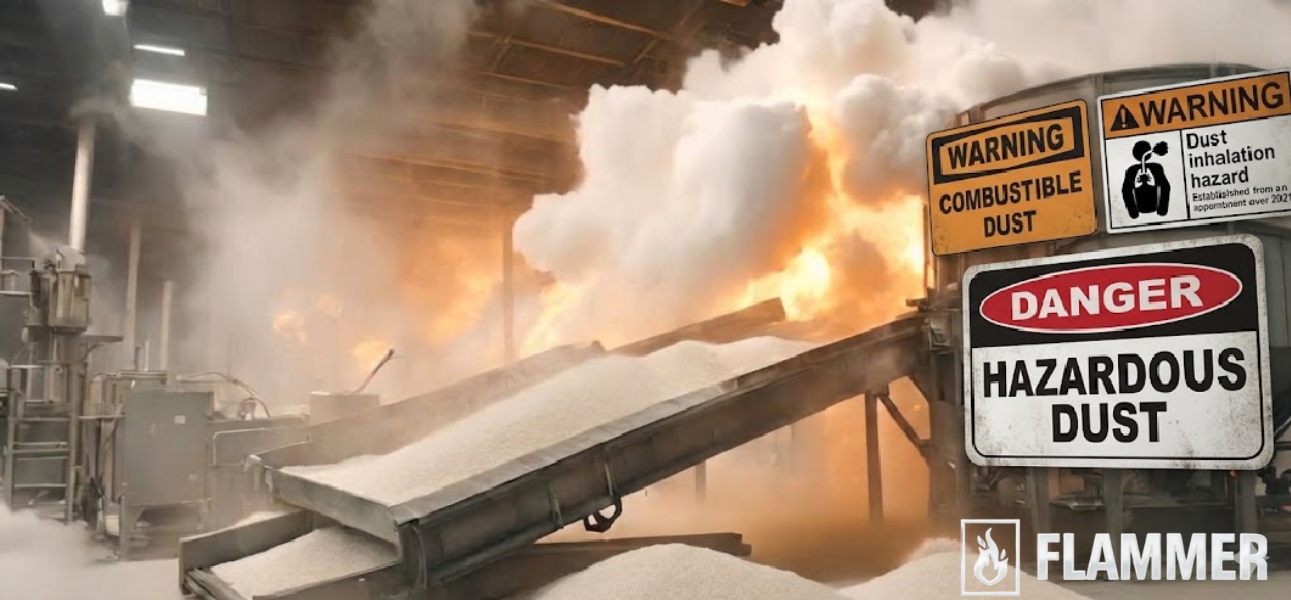
Combustible dust is any fine particulate solid material that can catch fire and explode when suspended in air in sufficient concentrations. When mixed with oxygen and triggered by an ignition source — a spark, hot surface, or static discharge — even ordinary materials like sugar, wood, or aluminium become capable of devastating deflagrations.
Industries handling powdered or granular materials are at risk. Identifying whether your dust is combustible — and characterising how explosive it is — enables you to design and install the right explosion protection devices and safe operating procedures
Common Combustible Dust Categories
Agriculture
Sugar, starch, flour, grain, feed powder
Metals
Iron powder, aluminium, zinc, magnesium
Coal & Mining
Carbon black, coal dust, sulphur
Wood & Paper
Paper dust, sawdust, wood flour, cellulose
Chemicals & Pharma
Resins, plastic powders, pigments, APIs
Paints & Coatings
Spray powders, Pigment dust, epoxy resins
Combustible Dust Testing Monitoring for Industrial Safety and Risk Control
Combustible Dust Testing Monitoring plays an important role in industries where fine dust or powder is generated during production. Materials like sugar, flour, chemicals, metal dust, and pharmaceutical powders may look harmless, but when mixed with air in the right conditions, they can cause serious explosions. You can stop a disaster before it starts by keeping a close eye on your dust levels and their explosive potential.
Through detailed analysis of factors such as Kst, Pmax, Minimum Ignition Energy (MIE), and Minimum Ignition Temperature (MIT), industries can clearly understand how reactive their dust is. Flammer Technologies stands out among Combustible Dust Testing Monitoring manufacturers in India. Our approach ensures that your safety systems, like vents and valves, are perfectly calibrated. When you have a solid plan for your Combustible Dust Testing Services, you aren’t just following the law—you are genuinely protecting your team’s lives.
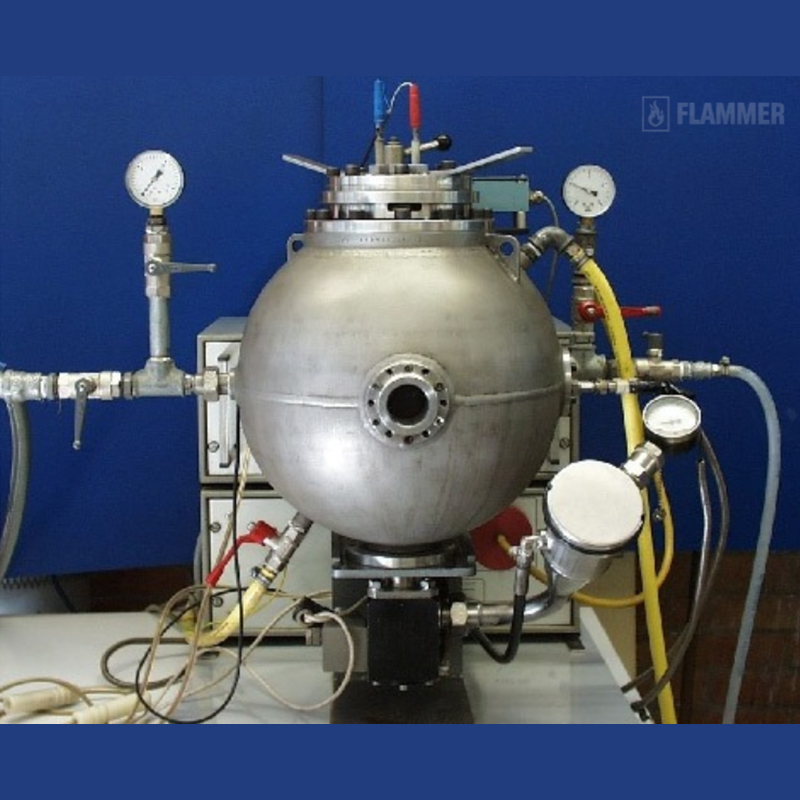
Advanced Combustible Dust Testing Monitoring Solutions by Experts
Choosing the right partner for your lab analysis and site safety is a big deal. You need a team that understands that every factory has its own unique risks. Our Combustible Dust Testing Monitoring is designed to be deep but easy for a manager to manage. We look at everything from how easily your dust ignites to how much pressure it creates in a confined space.
We have earned its spot as one of the most reliable Combustible Dust Testing Monitoring suppliers in India by focusing on practical, on-the-ground safety. We bridge the gap between complex lab results and your actual machinery. Our team works closely with plant operators and safety managers to make sure every report is useful and easy to understand. Investing in our monitoring services means you are putting a shield around your production line. We provide the hard facts you need to pass safety audits with flying colors and, more importantly, to ensure every worker goes home safe at the end of the shift.
The Dust Explosion Pentagon
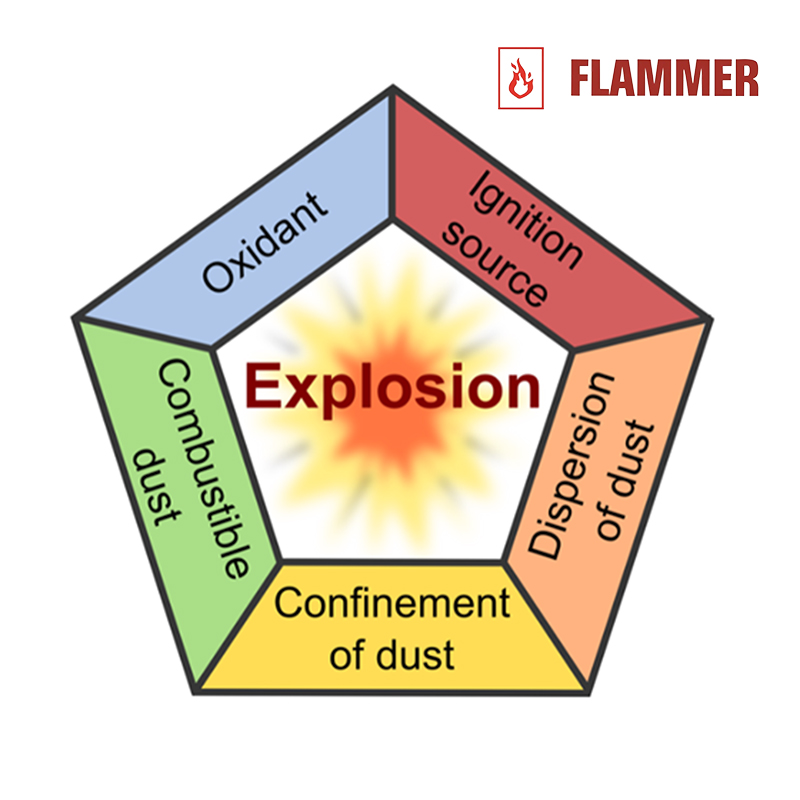
A dust explosion can only happen if five specific conditions line up at the exact same time. If you remove any one, an explosion cannot occur. A dust hazard analysis helps you figure out which controls you need to put in place.
01. Combustible Dust
The dust itself has to be combustible. Not every dust is — but many common industrial materials can catch fire surprisingly easily when they're ground down into fine particles.
03. Sufficient Concentration
That cloud has to be thick enough — it must exceed the Minimum Explosible Concentration (MEC). Below this level, the mixture is too weak to keep a deflagration going.
05. Confinement
When a dust cloud ignites inside enclosed equipment (silos, dust collectors, elevators), pressure builds rapidly, leading to a destructive explosion.
02. Dust Suspension in Air
Dust needs to be floating in the air as a cloud. Dust that's just sitting on surfaces won't explode on its own — but if something disturbs it (like a gust of air or equipment movement), it can instantly turn into a dangerous cloud.
04. Ignition Source
There must be an ignition source with enough energy to ignite the dust—like an electrical spark, a hot surface, or a static shock. MIE and MIT tests tell you what safe limits look like.
06.Protection Strategy
By testing your dust and knowing its parameters, Flammer Technologies can design the correct explosion venting, suppression, or isolation solution.
Key Dust Test Parameters
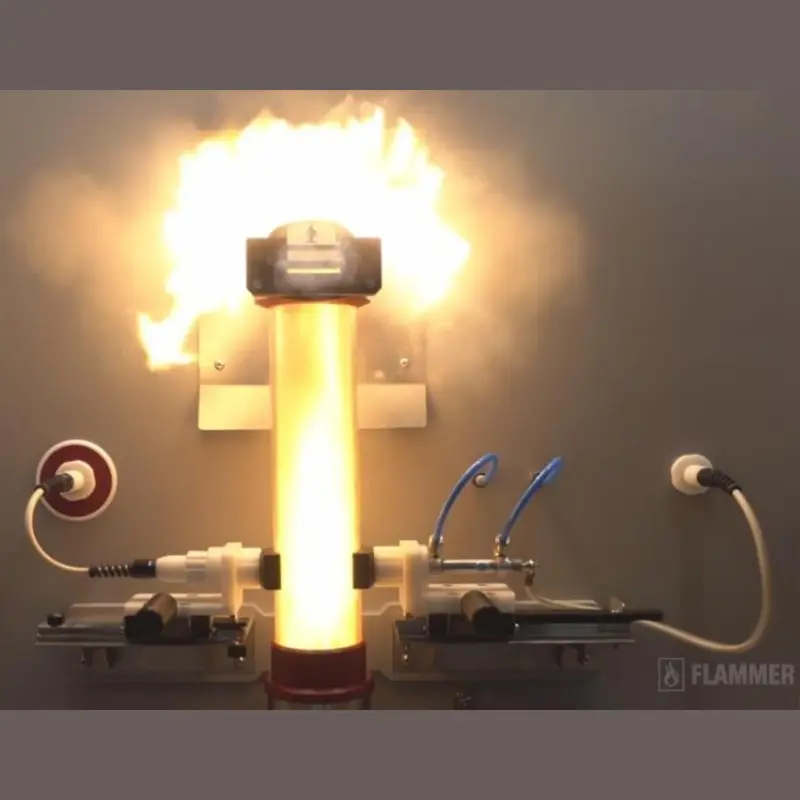
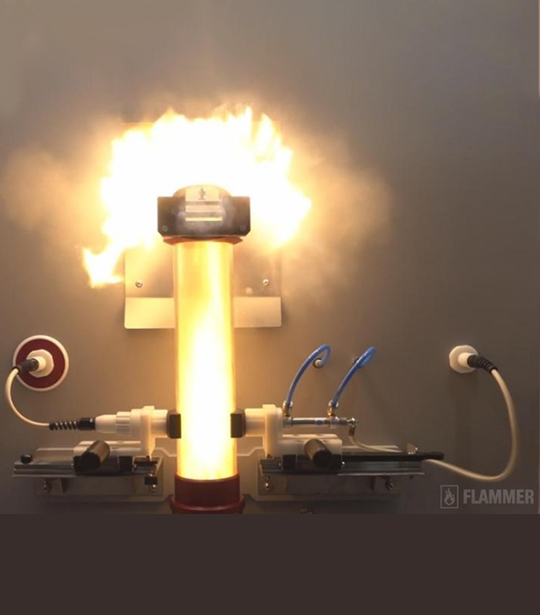
Hartmanns apparatus for Minimum Ignition Energy (MIE) Testing.
1. Kst (Deflagration Index)
The maximum rate of pressure rise in a dust explosion. Determines the ST class (ST1, ST2, ST3) and drives vent sizing calculations.
2. Pmax (Maximum Explosion Pressure)
The highest pressure reached during a contained dust explosion. Critical for equipment containment design and pressure-resistant enclosure specifications.
3. MIE (Minimum Ignition Energy)
The lowest spark or discharge energy capable of igniting a dust cloud. Essential for electrostatic hazard control and equipment earthing requirements.
4. MIT (Minimum Ignition Temperature)
The lowest surface temperature that ignites a dust cloud or settled layer. Sets safe operating limits for heated equipment and dryers.
5. MEC (Minimum Explosible Concentration)
The minimum dust-in-air concentration required for ignition to occur. Used to design ventilation systems that keep concentrations safely below this threshold.
6. LOC (Limiting Oxygen Concentration)
The oxygen level below which a dust explosion cannot occur. Key parameter for inerting system design using nitrogen or CO₂ blanket protection.
From Dust Sample to Safe Facility
Our engineers discuss your process, materials handled, and facility layout to understand the scope of dust hazard present.
A representative dust sample is collected from your process — we guide you on correct sampling technique and quantity required.
Your sample is characterised for Kst, Pmax, MIE, MIT, MEC and LOC values using standardised test methods (EN / ASTM).
Flammer Technologies supplies the right dust explosion protection devices — vents, suppressors, isolation valves — sized to your exact parameters.
Protecting Every Industry
Common Questions
Without testing, you’re working blind — you don’t know your dust’s real explosive potential. Testing gives you the data you need to design proper explosion protection, meet safety regulations, and keep workers and equipment safe from a catastrophic deflagration event.
In India, the Factories Act and applicable PESO regulations require employers to assess and reduce explosion risks. Globally, ATEX (EU) and NFPA 652/654 (US) standards require Dust Hazard Analyses for facilities handling combustible particulates.
A deflagration means the fire spreads at sub-sonic speeds through the dust cloud, whereas a detonation travels at supersonic speeds with a shock wave. While almost all factory dust blasts are technically deflagrations, they still easily generate 7 to 10 bar of intense pressure, which is more than enough to flatten heavy steel machinery and collapse buildings.
Flammer Technologies provides a full lineup of safety hardware, including chemical explosion suppression systems, explosive venting panels, flameless vents, chemical isolation barriers, and mechanical isolation valves. We custom-size every single one of these systems to match the exact Kst and Pmax ratings of your specific dust.
This is not recommended. Even small differences in particle size, moisture content, or chemical composition can significantly change a dust’s explosive characteristics. Test data must represent the actual material as it exists in your specific process.
A site consultation typically lasts 1-2 days, laboratory testing 7-14 working days, and report preparation 3-5 days. Flammer Technologies can provide a complete project timeframe at the initial meeting.
