
What is Industrial Dust Testing?
What is Industrial Dust Testing?
Industrial Dust Testing is the scientific process of measuring the explosive and combustibility properties of dust particles generated in industrial facilities. Many people don’t realize that even sugar, wood, grain, or certain metals can turn into a serious explosion hazard under the right conditions.
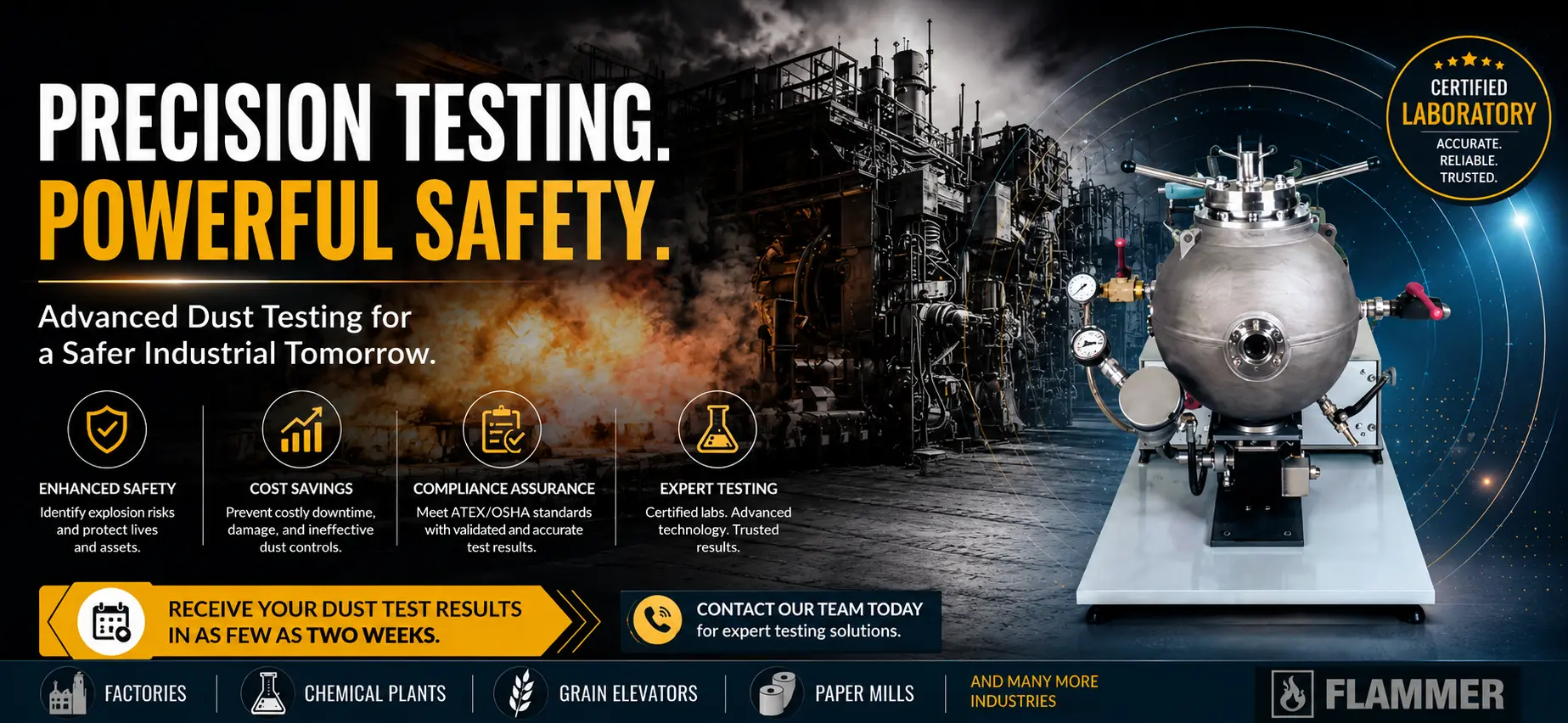
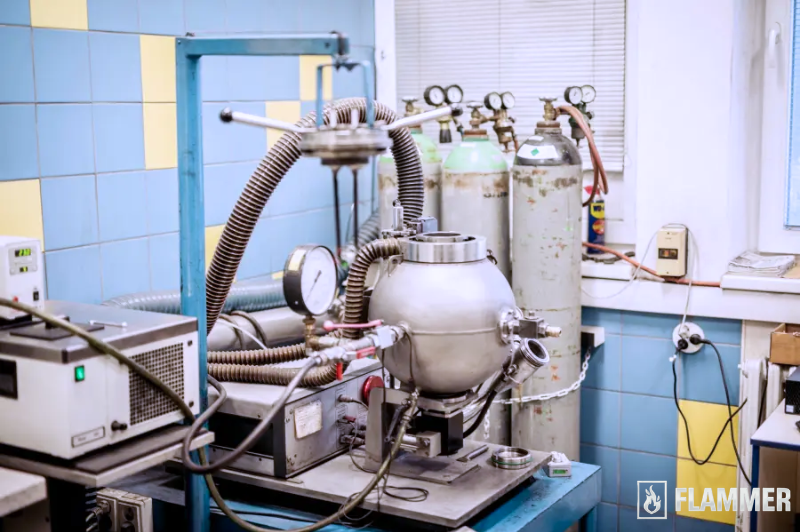
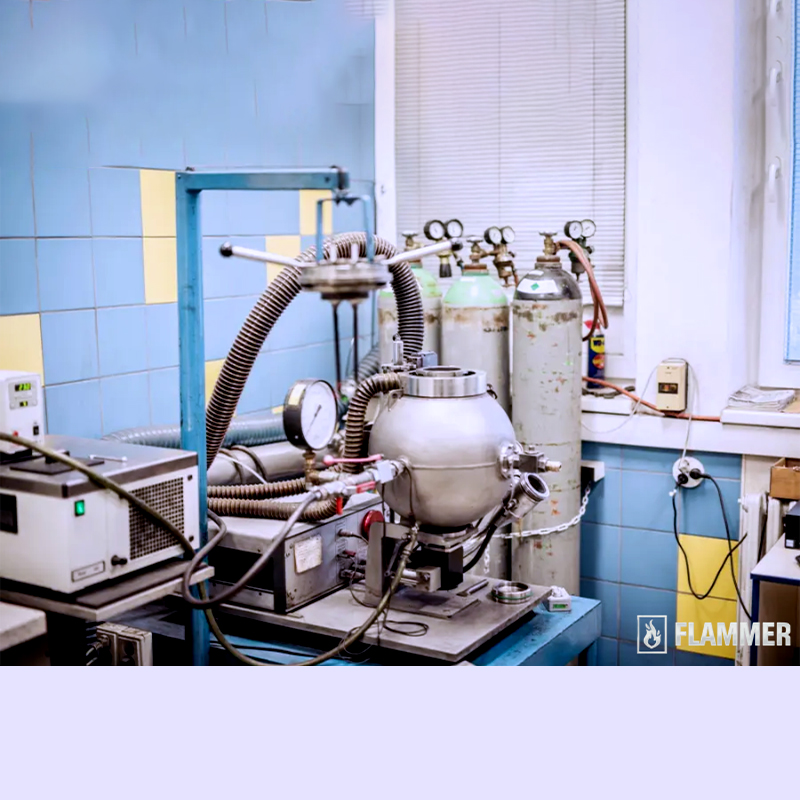
Flammer Technologies provides empirical evidence to factories, chemical plants, grain elevators, paper mills and more about the explosibility characteristics of their facility’s dust. Testing uses a 20-liter chamber designed to provide accurate measurements that represent real-world, industrial-sized applications. As a trusted Dust Testing service provider in India, we provide accurate testing, proper lab practices, and clear reports.
Key Testing Parameters
| Code | Parameter | Description |
|---|---|---|
| Kst | Deflagration Index | Measures the rate of pressure rise during a dust explosion. Classifies dust into St-1, St-2, or St-3 hazard classes. |
| Pmax | Maximum Explosion Pressure | The peak pressure generated during a dust explosion. Critical for designing containment structures and suppression systems. |
| MIE | Minimum Ignition Energy | The lowest energy spark that can ignite a dust cloud. Guides electrostatic and electrical equipment safety measures. |
| MIT | Minimum Ignition Temperature | Temperature at which a dust cloud or layer ignites. Essential for process temperature controls and hot surface safety. |
Protecting Your Facility with Accurate Industrial Dust Testing
If you are running a plant that processes solids, you need to understand the importance of dust testing. Some dust types can catch fire or explode if the right conditions occur. Many materials—from pharmaceuticals to simple sugar—can be highly explosive. Industrial Dust Testing is the first step in making sure your facility doesn’t face a catastrophic explosion. The testing also identifies how dust behaves under various conditions.
At Flammer Technologies, we help you understand these risks through specialized Kst testing, which measures how fast a potential explosion would spread, and Pmax testing, which tells us the maximum pressure the blast would create. Dust tests are used to ensure the facility, staff, and equipment are always safe. As one of the reliable Industrial dust testing manufacturers in India, we make sure every test is accurate and easy to understand. We bridge the gap between complex lab science and the actual factory floor.
Industrial Dust Testing Services for Better Risk Planning
Choosing the right partner for your lab analysis is a huge decision because people’s lives depend on the results. Our Industrial Dust Testing services are designed to be thorough but easy for plant managers to follow. We perform critical Dust ignition testing to see exactly what temperature or spark level could trigger a fire in your dust clouds. This data is the backbone of a successful Dust hazard analysis testing plan, which is required for modern safety standards.
These tests help companies understand the real risk from their materials and make plants safer. Our methods are designed to give clear insights into dust reactivity and potential hazards. As one of the most reliable Industrial dust testing suppliers in India when it comes to safety protocols, we provide the data you need to stay compliant. We give you the right information so they can make smart safety decisions and protect their people, equipment, and operations.
Benefits of Dust Testing
Safety, the foundation of any successful business operation, is significantly enhanced through thorough dust testing. It tells you exactly how explosive the dust in your facility is — things like Minimum Ignition Temperature and Energy Sensitivity — so you know what you are dealing with and can act on it before something goes wrong.
When you have that information, putting the right safety measures in place becomes straightforward. Your workers stay protected, your equipment stays intact, and your facility does not become a statistic.
Dust testing is an upfront cost — there is no getting around that. But consider what an industrial accident actually brings with it: damaged machinery, lost production days, legal proceedings, and regulatory fines. The numbers add up quickly. Testing is simply the smarter financial choice. It protects your business from costs that no budget is prepared for.
- Find hidden explosion risks — sugar, wood, grain, and metals are all capable of igniting
- Build explosion protection systems on actual measured data, not guesswork
- Stay compliant with EN 14491, NFPA 68, and ATEX directives
- Cut long-term financial exposure from accidents, downtime, and legal liability
- Create a genuine safety culture that runs through your entire organization
Testing Process
| Step 01 |
Sample Collection & Submission |
Collect representative dust samples from your facility — from collection systems, process areas, or accumulation points. Samples are shipped to our lab in Vadodara. |
| Step 02 |
Sample Preparation & Conditioning |
Samples are dried, sieved, and prepared to standardized particle size distributions ensuring results accurately represent worst-case conditions in your plant. |
| Step 03 | 20-Liter Sphere Testing | Tests are conducted in our calibrated 20-liter spherical explosion chamber — the internationally recognized standard providing accurate measurements for Kst, Pmax, MIE, and MIT. |
| Step 04 | Analysis & Certified Report | Results are analyzed by certified engineers and compiled into a comprehensive, audit-ready report with dust hazard classification and compliance documentation. |
| Step 05 |
Protection System Recommendations |
Our team reviews findings with you and recommends appropriate explosion protection measures — venting, suppression, isolation, or containment — based on your specific test data. |
