
Rupture Discs: A Vital Solution for Transformer Protection
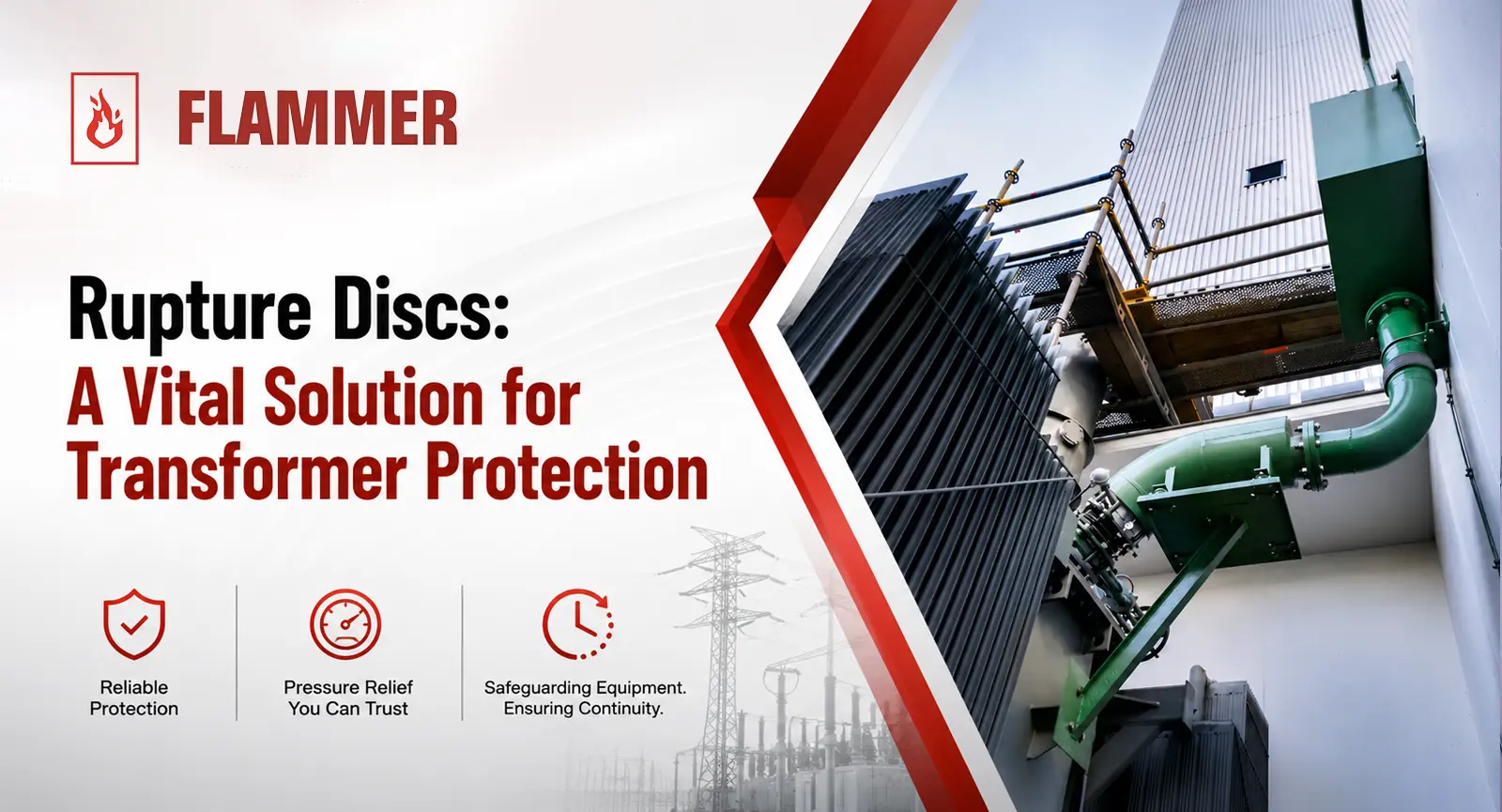
Quick Summary: Transformer explosions are fast, destructive, and costly. Conventional safety devices like Buchholz relays and pressure relief valves respond too slowly to prevent them. Rupture discs — fast-acting, passive mechanical devices — activate within milliseconds of a pressure spike, venting dangerous overpressure before the transformer tank ruptures. They comply with NFPA 850 and ASME standards and are proven across transformer ratings from 0.1 MVA to 1,000 MVA and beyond.
- Why Transformer Protection Is a Serious Industrial Problem
- How Internal Faults Create Dangerous Pressure Surges
- Limitations of Conventional Safety Measures
- Rupture Discs: The Fast Depressurization Solution
- How Rupture Discs Outperform Conventional Protection
- Why Does the Industry Need Rupture Discs?
- Proven Performance and Standards Compliance
- Looking Ahead: A Safety-First Approach
- Frequently Asked Questions
Why Transformer Protection Is a Serious Industrial Problem
Transformers are among the most critical components in any electrical power system. They are built to last decades and operate reliably under demanding conditions. But even the most robust transformer is vulnerable to one specific failure mode — internal faults that generate high-energy electric arcs. These arcs are not slow events. They happen in milliseconds, evaporating transformer oil almost instantly and creating pressure surges that can rupture the tank and cause catastrophic explosions.
The 2015 CIGRE survey reported an annual transformer failure rate of 1%, with generator step-up transformers experiencing even higher rates. Bangladesh alone reports at least 39,000 transformer blasts annually, with losses exceeding 30 million USD every year. The numbers make the case clearly — existing protection systems are not keeping up.
Unfortunately, existing safety measures often fail to act swiftly enough to prevent such disasters. Regulatory gaps—such as the IEC 76 Norm’s omission of critical mechanical design considerations—compound the problem, leaving transformers and surrounding infrastructure vulnerable.
In this challenging environment, rupture discs are a fast acting, reliable solution that addresses the limitations of traditional safety systems.
How Internal Faults Create Dangerous Pressure Surges
When a low-impedance fault or internal short circuit occurs inside a transformer, the resulting electric arc releases enormous energy in an extremely short period of time. That energy instantly vaporises the dielectric oil around it, generating a pressure wave that travels through the entire tank in milliseconds.
The problem isn’t just the pressure — it’s how fast the pressure rises:
- The pressure surge happens faster than most protection devices can detect and respond to.
- The pressure gradient — the rate at which pressure rises — is extremely steep.
- By the time a conventional device registers the fault, dangerous pressure levels have already reached its peak.
- If the tank can't vent this pressure fast enough, it fails — releasing burning oil and potentially triggering a full explosion
This is the fundamental problem that rupture discs are designed to solve.
Limitations of Conventional Safety Measures
Several protection devices are currently used in transformer safety systems. Each has significant limitations when it comes to handling the rapid pressure dynamics of an arc fault.
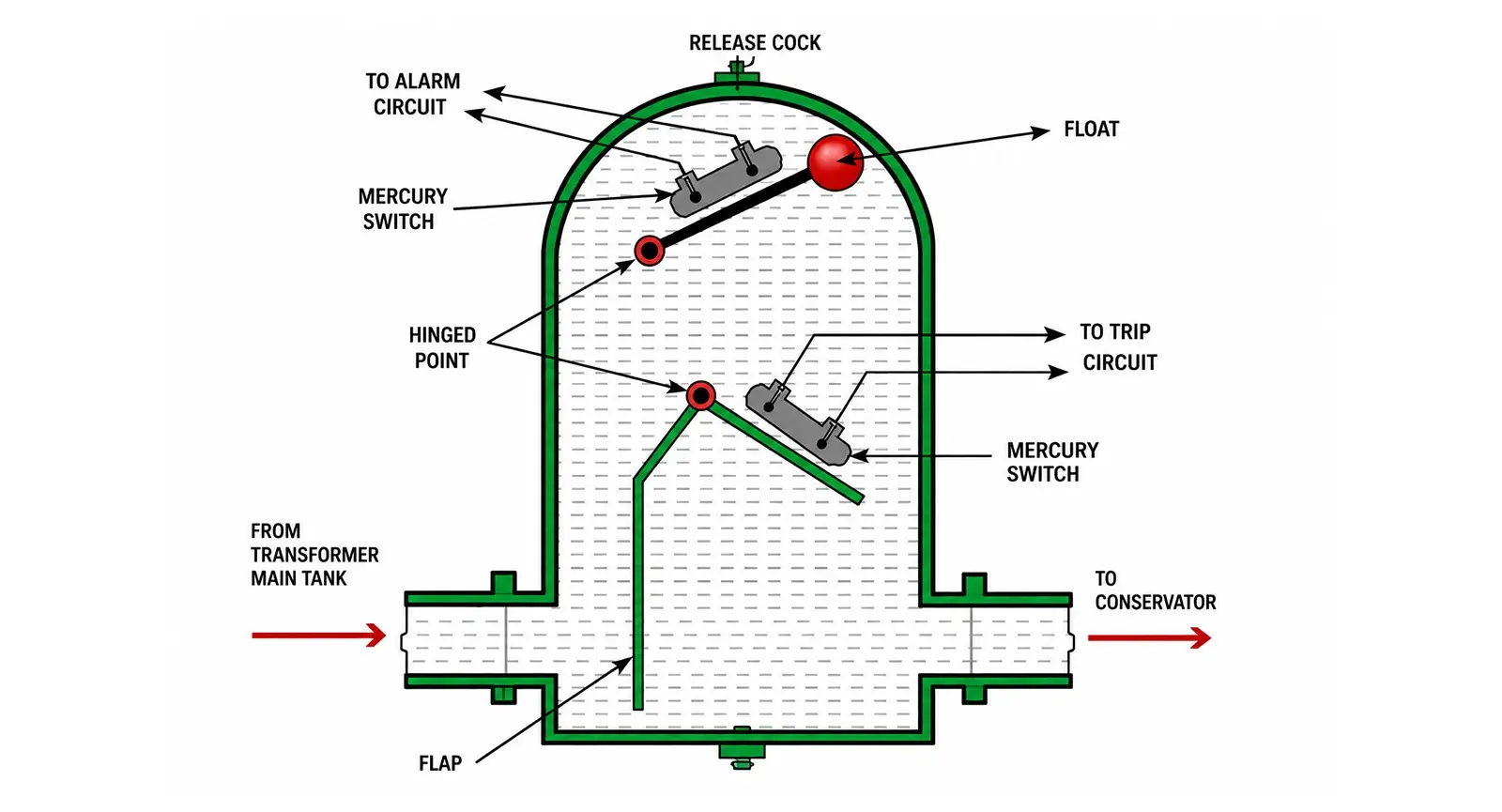
Buchholz Relay
The Buchholz relay is a standard requirement for transformers above 1 MVA. It detects gas accumulation and oil movement inside the transformer and triggers an alarm or trip.
The problem:
- Response time exceeds 100 milliseconds — far too slow for arc fault events
- Cannot detect the sharp pressure gradients generated during low-impedance faults
- By the time the relay responds, the pressure surge has already done its damage
Pressure Relief Valves (PRD)
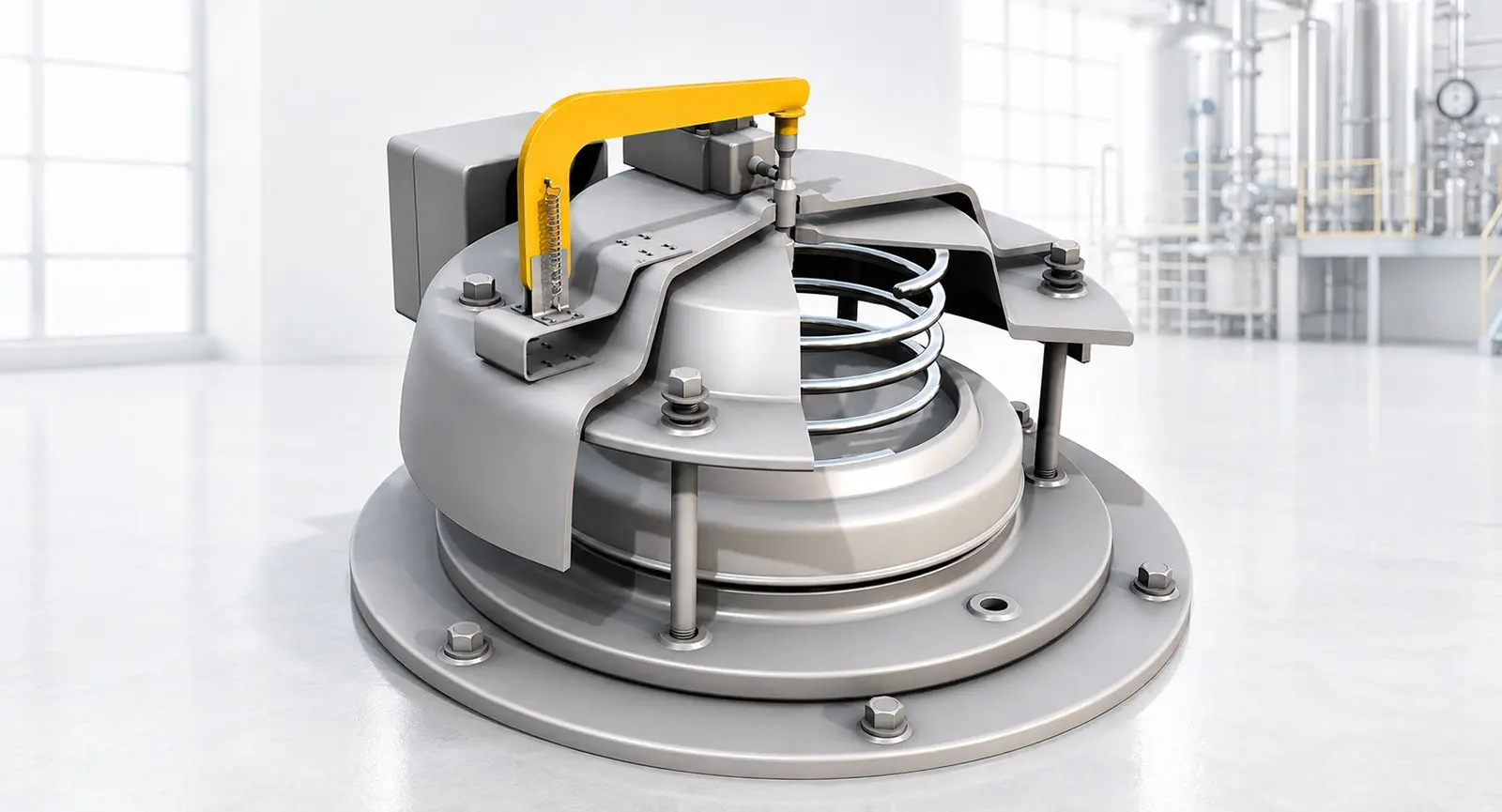
Pressure relief valves are the most widely used pressure protection device on transformers. They open when internal pressure reaches a set threshold.
The problem:
- Designed for gradual pressure increases, not quick pressure spikes.
- The opening speed is very low to vent the explosive pressure generated during arc faults.
- Despite widespread deployment, transformer explosions continue to occur in facilities that rely on these valves alone
Firewalls and Extinguishing Systems
Water, foam, and firewall systems are useful for containing a fire after an explosion. They do not prevent the explosion itself.
The limitation:
- These systems address the consequence — fire — not the cause, which is overpressure and tank rupture
- They are important secondary measures but cannot substitute for primary pressure protection
Flexible and Reinforced Transformer Tanks
Some manufacturers promote flexible or reinforced tank designs as an alternative approach to overpressure protection.
The problem:
- These designs lack comprehensive live testing data
- They do not meet NFPA 850 recommendations for overpressure protection
- Their actual performance under real arc fault conditions remains unverified
Rupture Discs: The Fast Depressurization Solution
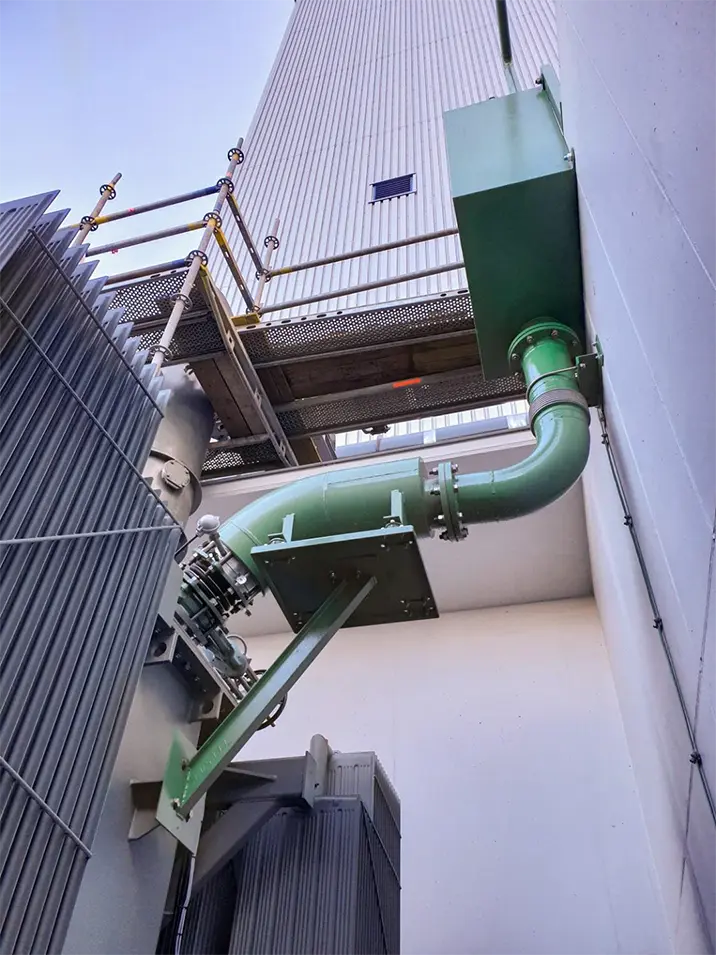
A rupture disc — sometimes called a bursting disc or pressure safety disc — is a one-time-use, passive pressure relief device. It’s a precisely engineered disc that bursts open at a specific differential pressure. When pressure inside the system reaches that burst rating, the disc opens fully and instantly — creating a complete, unobstructed vent path for the overpressure to escape.
Pressure safety discs are designed to react within milliseconds, offering immediate relief from dangerous pressure spikes, unlike conventional methods. Rupture discs used for Fast Depressurization Systems (FDS) are compliant to NFPA 850 and NFPA 851 requirements.
Key operating characteristics:
- Activation trigger — the disc responds to dynamic pressure peaks, not just static pressure levels; it activates as the pressure wave builds, before static pressure reaches critical tank rupture levels
- Response time — milliseconds; significantly faster than any relay or valve-based system
- Passive operation — no sensors, no electronics, no external power required; the disc responds directly to the pressure it experiences
- One-time use — once the disc bursts, it must be replaced; it does not reseat or reclose
How Rupture Discs Outperform Conventional Protection
The core advantage of a rupture disc over conventional protection is speed — and in transformer protection, speed is everything.
Protection Device | Response Time | Detects Sharp Pressure Gradients | Passive Operation | NFPA 850 Compliant |
Buchholz Relay | >100 ms | No | Yes | No |
Pressure Relief Valve | Seconds | No | Yes | No |
Rupture Disc (FDS) | Milliseconds | Yes | Yes | Yes |
Additional advantages of rupture discs in Fast Depressurization Systems:
- Activated by dynamic pressure peaks — the disc responds to the pressure wave as it rises, acting well before static pressure reaches the level that would rupture the tank
- Effective venting — properly sized burst discs vent overpressure directly into connected drain tanks, preventing oil release into the environment
- No false activations — unlike relays that can respond to non-fault events, a bursting disc only opens when actual burst pressure is reached
- Standards compliance — Fast Depressurization Systems using rupture discs comply with NFPA 850 and NFPA 851, the leading international standards for the protection of electric generating plants and hydroelectric generating plants
Why Does the Industry Need Rupture Discs?
The damage from a transformer explosion goes far beyond the equipment itself. Studies and real world data shows the devastating consequences of transformer explosions:
Environmental impact:
- A single explosion can release thousands of litres of dielectric oil into the environment.
- This oil contaminates water bodies and soil, causing long-term environmental damage and high clean-up costs.
Infrastructure damage:
- Explosions damage substation equipment, switchgear and nearby plants.
- Repairing a destroyed substation can take months or years, and long outages have spillover economic impacts throughout the grid.
Human risk:
- Personnel inside or near the substation at the time of an explosion are in danger of serious injury or death.
- Nearby communities can be exposed to fire, toxic fumes, and the possibility of large-scale evacuation.
Financial loss:
- Equipment replacement, environmental remediation, lost revenue during the outage, and liability together make a single transformer explosion an extremely expensive event — often running into crores of rupees for a single incident.
The 2015 CIGRE survey data, combined with evidence from countries like Bangladesh where transformer failures are extremely frequent, underlines why fast, reliable pressure protection is not optional — it is essential infrastructure.
Proven Performance and Standards Compliance
Rupture discs used in transformer Fast Depressurization Systems have undergone extensive live testing in sealed, oil-filled transformers under real arc fault conditions.
Proven performance data:
- Tested to handle arc energies exceeding 1 megajoule (MJ) — representing the energy released in a severe internal fault
- Applicable across transformer ratings from 0.1 MVA to 1,000 MVA and beyond
- Designed and manufactured to comply with ASME pressure vessel codes
- Fast Depressurization Systems comply with NFPA 850 (Protection of Electric Generating Plants) and NFPA 851 (Protection of Hydroelectric Generating Plants)
Rupture discs are also used as pressure relief devices in GIS (Gas Insulated Switchgear) switchgear applications — demonstrating their reliability across high-value, safety-critical electrical infrastructure beyond transformers alone.
Flammer Technologies has successfully implemented bursting disc solutions across missile canister systems, explosion suppression systems, and heavy industrial transformers — bringing the same engineering rigour to transformer protection that is applied in these demanding fields.
Looking Ahead: A Safety-First Approach
As the demand for reliable and sustainable energy grows, the importance of safeguarding critical infrastructure cannot be overstated. Rupture discs, as part of Fast Depressurization Systems, offer an indispensable line of defense against transformer explosions, aligning with global safety standards and best practices.
At Flammer Technologies, we are proud to contribute to the safety of electric and hydroelectric generating plants by providing advanced burst disc solutions. Flammer Technologies is a manufacturer of rupture discs and explosion protection equipment.
Our goal is to make quality and effective pressure relief devices like pressure safety discs accessible to everyone. Our products are designed to meet the highest industry standards, ensuring reliability and peace of mind for our clients.
Join the Conversation
Regards,
Ronak Patel, Director
Flammer Technologies Private Limited, India
Tel. +91 9586363631
Email. ronak.patel@flammertech.com
Frequently Asked Questions
What is a rupture disc and how is it different from a pressure relief valve?
A rupture disc is a one-time-use, passive mechanical device that bursts open at a precisely defined differential pressure. Unlike a pressure relief valve, which opens gradually and reseats after pressure drops, a burst disc opens fully and instantly — making it far more effective for rapid pressure events like those generated by transformer arc faults. A pressure relief valve responds in seconds; a disc responds in milliseconds.
Why can't a Buchholz relay protect a transformer from arc fault explosions?
A Buchholz relay has a response time exceeding 100 milliseconds and is designed to detect gas accumulation and slow oil movement — not the sharp pressure gradients of an arc fault. By the time the relay activates and signals a trip, the pressure surge from a low-impedance fault has already occurred and may have already caused tank rupture.
What standards do burst discs for transformer protection comply with?
Bursting discs used in Fast Depressurization Systems comply with NFPA 850 (Protection of Electric Generating Plants and High Voltage Direct Current Converter Stations) and NFPA 851 (Recommended Practice for the Protection of Hydroelectric Generating Plants). The devices are also designed to meet ASME pressure vessel code requirements.
What transformer sizes can be protected by rupture discs?
Rupture disc-based Fast Depressurization Systems have been proven for transformers from 0.1 MVA to 1,000 MVA and beyond. The disc and system sizing are matched to the specific transformer rating, oil volume, and fault energy levels expected for each application.
Does a pressure safety disc need external power or electronics to operate?
No. A pressure safety disc is a purely passive mechanical device. It requires no external power, no sensors, and no electronic control system of any kind. It responds directly to the differential pressure it physically experiences — which makes it inherently reliable even during the electrical disturbances and power faults that accompany a transformer failure event.
Can rupture discs be used on transformers that are already installed?
Yes. Fast Depressurization Systems using burst discs can be retrofitted to existing transformers. The specific installation requirements depend on the transformer design and tank configuration. A technical assessment of the transformer is typically carried out before retrofitting to confirm sizing and mounting arrangements.
