
What Is an Explosion Vent? How It Works and Where It Is Used
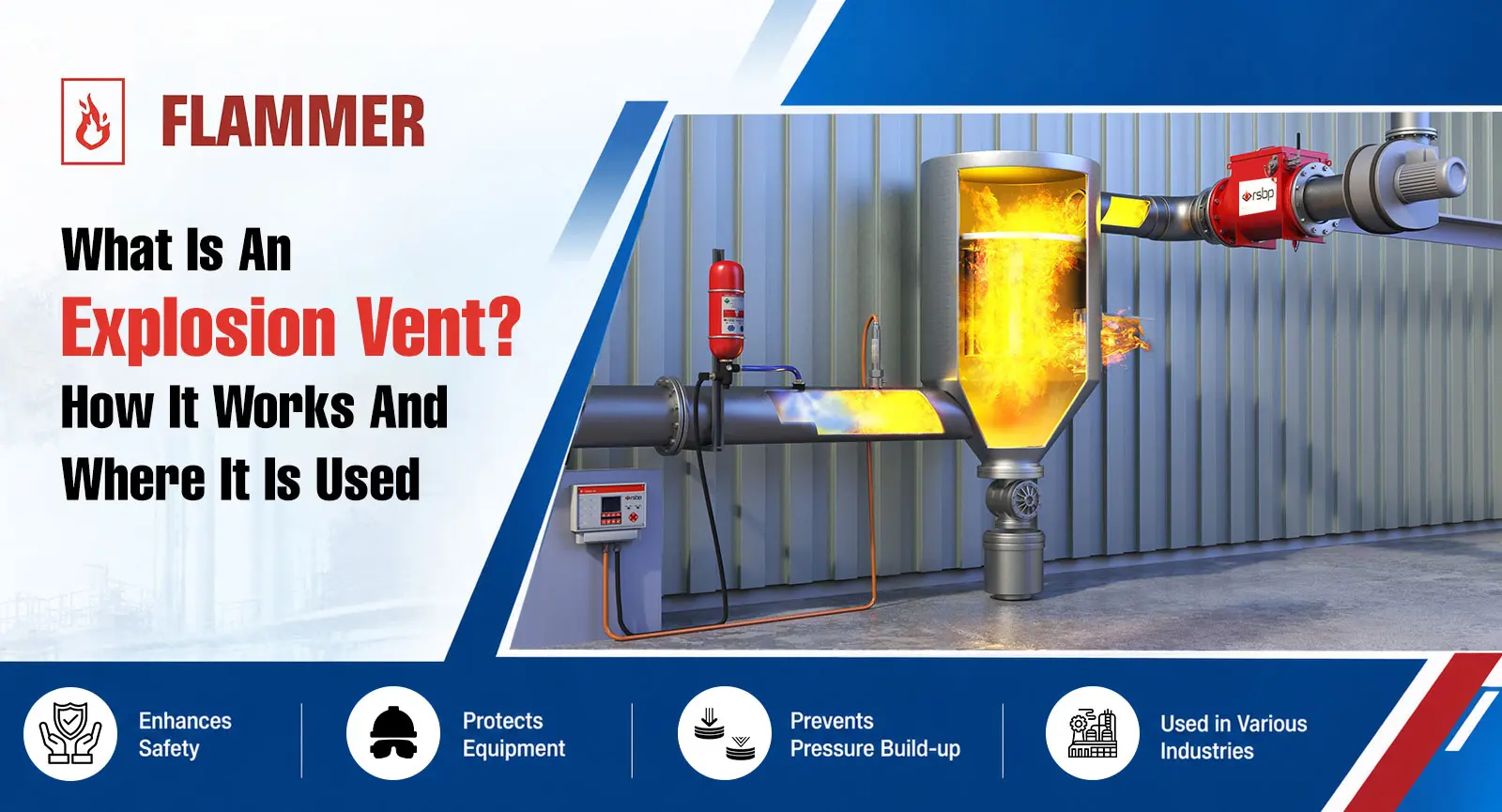
Overview – A single spark inside a dust-filled silo can build up enough pressure to blow the whole structure apart within seconds, and the one part standing between that and a controlled release is a device most people have never heard of. This blog explains what an explosion vent is, how it works, and where it is used, in plain terms, so you know exactly what you are buying and why it matters for your plant.
Introduction
An explosion vent is a safety device fitted on equipment that handles combustible dust or gas. It is built to open at a set pressure and release the force of an explosion before it can tear apart the equipment itself. Factories that work with fine dust, powders, or flammable gases install this device on silos, dust collectors, and similar equipment as a basic safety step.
It does not stop an explosion from happening, but it stops that explosion from destroying the vessel and putting workers at risk. In plants where combustible dust is part of daily operations, this is one of the first safety devices a safety inspector checks for, since its absence is treated as a serious gap in the plant’s fire and explosion safety setup.
How An Explosion Vent Works
An explosion vent stays shut during normal working conditions and only reacts when pressure crosses its rated limit. Dust or gas inside enclosed equipment can ignite due to a spark, static, or hot surface, and this ignition causes pressure to shoot up in a fraction of a second.
The panel is calibrated to burst open right at that critical pressure point, before the pressure builds high enough to damage the vessel. Once it opens, the pressure and flame escape through the opening into a safe direction, away from workers and nearby equipment. After it releases, the panel is replaced before the equipment goes back into use.
Types Available
Not every application needs the same kind of vent, so a few designs exist to match different conditions. Single-layer flat and convex panels cover most standard dust applications and are the most common types in use. Models built with an integrated frame or a triple-layer design handle higher vacuum loads, which matters for equipment that runs under vacuum or goes through frequent pressure cycling. Hygienic-grade panels are used in food and pharmaceutical plants where the seal material needs to meet FDA or USDA standards.
Round panels with a PTFE seal are built for circular ducting rather than rectangular openings. Some models also come with a thermal insulation layer as an accessory, which helps where the vessel itself runs hot or cold and the panel needs to hold up under that temperature swing. Picking the right type comes down to your equipment’s shape, the vacuum level it runs at, and the temperature range it operates in.
Where It Is Used
An explosion vent is fitted wherever combustible dust or gas builds up inside closed equipment. Common locations include filters and cyclones, silos and storage equipment, bucket elevators, spray dryers, dust collectors, pneumatic conveying lines, and mills. Any of this equipment can be placed outdoors directly or indoors if the vent is ducted out to a safe outside area. Industries such as food processing, chemicals, pharmaceuticals, wood and paper, and metal powder handling all use this device across different parts of their plant.
Why Factories Choose This Safety Device
An explosion vent is a passive device, meaning it works purely through mechanical action and needs no power, sensor, or control system to function. This makes it a low-maintenance option once it is installed correctly, since there is nothing to service regularly apart from checking it during routine inspections. It also costs less than active suppression systems that use electronics and chemical agents.
For equipment that already sits outdoors, this is usually the most practical and cost-effective safety option available. A properly certified panel, built to standards like NFPA 68 and ATEX, also keeps your plant compliant with safety norms that apply to combustible dust and gas handling.
Where to Buy a Reliable Explosion Vent
Flammer Technologies, based in Vadodara, Gujarat, manufactures a full range of explosion safety equipment, including explosion vents, flameless explosion vents, explosion suppression systems, isolation valves, and rupture discs, out of two manufacturing units in the city. Their Vent Pro range covers single-layer, hygienic-grade, and triple-layer designs, built to handle temperatures from minus 60°C up to 240°C and rated for both dust and gas atmospheres.
Every design is NFPA 68 compliant and ATEX certified, and the team can help you pick the right model based on your vessel size, vacuum level, and the material you are handling. Buyers can also get technical datasheets for each model before finalizing, so the specification matches the equipment it will be fitted on.
Frequently Asked Questions
Does an explosion vent stop an explosion from happening?
No, it does not prevent the explosion itself. It releases the pressure from an explosion that has already started before that pressure can damage the vessel or hurt anyone nearby.
How often does an explosion vent need to be replaced?
It does not need routine replacement under normal conditions, since it only reacts once pressure crosses its rated limit. Once it has released during an actual explosion event, the panel is damaged and needs to be replaced before the equipment runs again.
Can this device be used indoors?
Yes, but the release side needs to be ducted out to a safe outdoor area, away from walkways and other equipment. Using it indoors without proper ducting defeats the purpose, since the released pressure and flame would still stay inside the building.
What is the difference between an explosion vent and a rupture disc?
Both work on a similar idea, releasing pressure at a set point, but they are built for different jobs. An explosion vent is designed specifically for dust or gas explosion relief on process equipment, while a rupture disc is generally used for controlled pressure relief in piping and pressure vessel systems under normal process conditions.
How is the right size and pressure rating for an explosion vent decided?
This is worked out based on the vessel’s volume, its structural strength, and the type of dust or gas being handled inside it. A supplier usually needs your vessel drawing and process details to calculate the correct vent area and burst pressure, since fitting an undersized or wrongly rated panel can leave the vessel under-protected.
